
Why Religion Suppresses Sexuality
Suppression and Control of Sexual Expression
Religion and sexuality have been entwined in a complex and often contentious relationship throughout history. A common thread that runs through most world religions is the suppression or control of sexual expression. From strict rules to condemnations and dogmas, these systems of belief have constructed walls of suppression around human sexuality, imposing these limitations on individuals from a young age. Messages like “don’t touch yourself,” “don’t be naked,” or “love only within the confines of marriage” are ingrained into the fabric of religious teachings, deeply influencing societal norms and personal beliefs.
This repression is not just restrictive – it can be profoundly destructive. It hinders the possibility of a happy and fulfilled life by denying a fundamental aspect of human nature. But why do the major religions impose such stringent controls on sexuality? What is the underlying agenda?
Sexuality a Direct Conduit to the Divine
In ancient practices such as Tantra and Taoism, sexuality is not viewed as something to be suppressed, but as a powerful tool for spiritual growth and divine connection. These traditions teach that sexuality, when practised with the right intentions and within a loving framework, can be a direct conduit to the ‘the Universe / God’.
By directing orgasmic energy inwards, practitioners aim to activate the pineal gland, which releases DMT (dimethyltryptamine), leading to altered states of consciousness often described as spiritual or mystical experiences. For millennia, Tantrics have used this knowledge to facilitate communication with the realms of the divine, access universal wisdom and connect with the higher self.
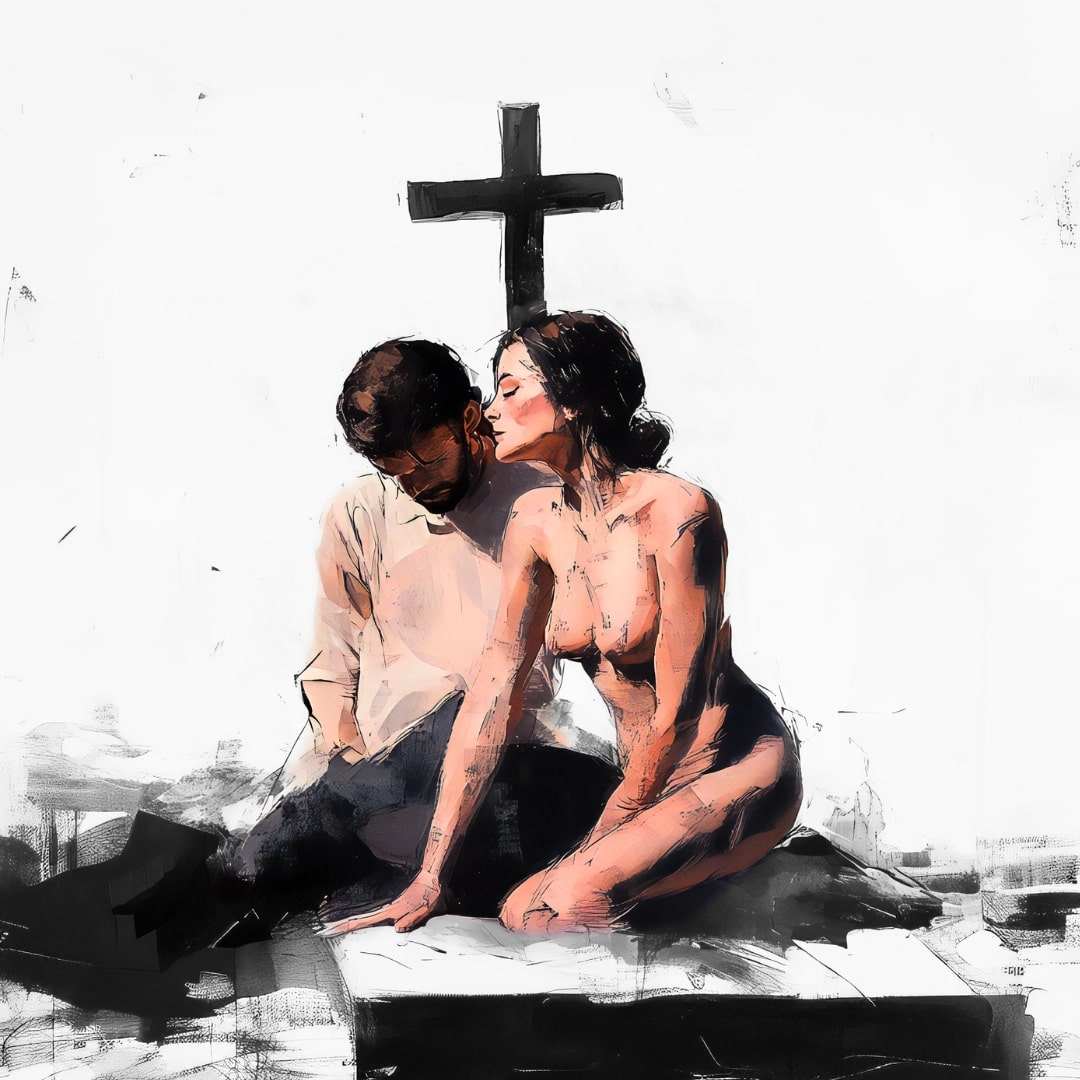
Art Ⓒ 2024 Philipp Mutschler
Religion Keeps People Anchored in Guilt to Create Dependency
In stark contrast, most religions promote a highly restrictive view of sexuality, portraying it as sinful or impure. This approach keeps people anchored in guilt and fear, dependent on the rules and solutions of religion, rather than exploring their own spiritual paths.
Such external control over our sexuality hinders our spiritual evolution. To reach our full divine potential, we must free ourselves from these limiting beliefs and embrace sexuality as a sacred, integral part of our spiritual journey.
Only then can we transcend the constraints of a system designed to keep us in a state of spiritual disconnection, serving its interests rather than our own growth and fulfilment.
© Philipp, 14 November 2024